(This article was written with the help of AI)
Overview
Agentic AI—the new breed of autonomous software agents—promises to radically reshape how small businesses interact with customers and drive sales. But while the appeal of round-the-clock, intelligent automation is clear, the cost of fully setting up an agentic AI framework that connects seamlessly with customers and other businesses remains out of reach for many small local operations in 2025.
The Agentic Advantage: How AI Drives Sales and Streamlines Service
Unlike traditional automation or chatbots, agentic AI is built to make decisions, take multi-step actions, and dynamically interact—with little oversight. For local businesses, the benefits are compelling:
- Handling Incoming Phone Calls: AI agents can answer high volumes of calls, provide personalized greetings, gather order details, answer product or menu questions, and place reservations or orders without human intervention, all while freeing staff for hands-on service.
- Customer Service and Product Questions: Agents can resolve common questions (hours, location, menu, allergy info, return policies), look up individual order statuses, and even initiate refunds or reschedule appointments automatically.
- Order Taking and Upselling: Intelligent agents can suggest menu items, highlight specials, upsell add-ons, and process payments directly over the phone, website, kiosks, or chat—offering remarkable consistency and 24/7 support.
- Peak Hour Relief: When lines are long or phones are ringing off the hook, agentic AI can shoulder 70% or more of routine service tasks, letting a lean staff focus on kitchen and table duties.
A Restaurant in Action: The “Digital Waiter” at Peak Time
Picture a small restaurant, understaffed on a stormy Friday night. As orders pour in, an agentic AI system:
- Fields every incoming call, answering common questions, updating on table status, or (if busy) capturing complete takeout orders—including suggested pairings based on past orders or inventory.
- Automatically updates table management, sending wait-time estimates and confirmations by SMS.
- Routes urgent allergy or large-group inquiries to the manager, while allowing basic bookings and menu mods to be handled entirely by the AI.
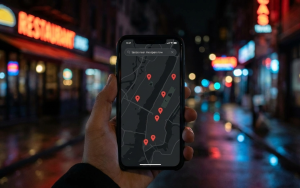
- Pushes real-time “happy hour” deals to regulars walking past the restaurant, driving incremental visits.
- If a key dish runs out, the agent instantly updates the website, phone, and in-store kiosks, suggesting alternatives and preventing customer disappointment.
Cost—And the Current Barrier
All these autonomous functions require deep integration: linking to inventory, booking, and POS systems; maintaining secure communications; and ensuring compliance with data and privacy regulations. Setting up such a sophisticated, multi-agent system often costs $30,000–$150,000 or more to build, with months of development and integration. Even pared-down frameworks run to tens of thousands, putting true agentic interoperability largely out of reach for most local businesses at present, but help is on the way for affordable systems (such as CRSTBL.com) and the history of technology means cost declines over time.
The Risk of Inaction
Should small businesses fail to adopt or be priced out of agentic solutions, they face concrete risks:
- Lost sales due to missed calls, slow service, or unstaffed peak hours.
- Lower customer satisfaction from inconsistent or delayed responses.
- Reduced competitiveness as larger rivals offer seamless, AI-driven convenience and speed.
What Functions Make Sense Now?
For early adopters, agentic functions that offer immediate, high-impact ROI are:
- AI-powered phone and chat front-desk (order intake, FAQs).
- Bookings/reservations (with SMS/email confirmation).
- Real-time product/menu info and intelligent upselling.
- Automated review requests and customer feedback handling after each transaction.
The full vision—true agent-to-agent commerce, with business systems negotiating and collaborating automatically—remains on the horizon for small players, but modular adoption is already delivering tangible benefits.
Ultimately, agentic AI won’t replace the human touch essential to small local business, but it will give staff the time to deliver it, especially when it matters most. Those who find creative ways to deploy modular agentic tools—carefully, affordably, and with an eye on customer experience—are positioned to outcompete, even on tight margins.