The funnel isn’t dead. It’s just learned to be everywhere at once
The marketing playbook we’ve relied on for the past decade is being rewritten in real-time. As CMOs, we’re facing a fundamental shift in how consumers discover, evaluate, and engage with brands—and if we’re honest, many of our MarTech stacks weren’t built for this moment.
The Fracturing of Attention
Remember when we could reliably reach our audience through search ads and social feeds? Those days aren’t gone, but they’re sharing the stage with an increasingly complex array of touchpoints that would have seemed like science fiction just five years ago.
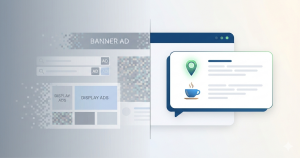
Your customers are having conversations with AI assistants that never surface your carefully optimized landing pages. They’re exploring virtual showrooms in VR headsets, attending concerts in metaverse venues where brands sponsor experiences rather than interrupt them, and discovering products through TikTok creators who’ve built more trust in 60 seconds than our display campaigns managed in 60 days.
And here’s the twist: in some markets, we’re seeing traditional television advertising make a comeback. Not because it’s trendy, but because in fragmented attention economy, sometimes the old channels offer unexpected pockets of engaged viewership that digital can’t match.
The New Discovery Paradox
The shift is more dramatic than a simple channel migration. When someone asks ChatGPT or Claude for a recommendation, there’s no ad placement to bid on. When they’re immersed in a virtual world, traditional banner logic breaks down entirely. When a nano-influencer with 5,000 highly engaged followers mentions your competitor, the conversion rate might eclipse your million-dollar campaign.
Product awareness is increasingly happening in one-to-one or one-to-few contexts:
- A celebrity mention in their Discord server
- An AI chatbot response during a late-night planning session
- A friend’s recommendation in a virtual reality hangout space
- A local TV spot catching them during a rare night of broadcast viewing
These aren’t scaled, predictable channels. They’re personal, contextual, and often ephemeral. The old funnel assumed we controlled the top—that awareness happened on our terms, through our chosen channels. That control is an illusion now.
The Moment of Truth: Funnel Flexibility
But here’s what hasn’t changed: once awareness sparks interest, consumers still want the same things they’ve always wanted. They want to know if you have what they need. They want to understand if the deal makes sense. They want to move forward without friction.
The critical question isn’t just “Can they find us?” It’s “When they do, are we ready?”
This is where most marketing organizations are dangerously exposed. Your customer might discover you through a VR product demo, verify you through an AI assistant, and then want to engage right now—at 11 PM on a Sunday, from a context you never anticipated.
Can your marTech stack handle that? Can you:
- Capture intent from a customer who never filled out a form?
- Attribute a conversion to a discovery moment that happened in a space you don’t monitor?
- Personalize an experience for someone entering mid-funnel from a channel you haven’t mapped?
- Fulfill on a promise made by an AI that scraped your website six months ago?
Building the Omni-Entry Funnel
The solution isn’t to chase every emerging platform—that’s a recipe for budget exhaustion and strategic whiplash. Instead, we need to fundamentally rethink how our funnel operates.
The modern marketing funnel must be omni-entry by design. It needs to:
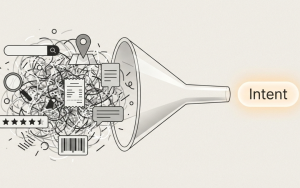
- Accept customers at any stage. Someone engaging after a VR experience might already be at consideration. Someone responding to a traditional TV ad might need more education. Your systems need to quickly identify where they are and serve them accordingly.
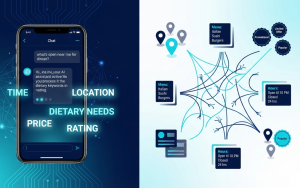
- Maintain persistent identity across contexts. When a customer interacts with your AI-powered chatbot, visits your virtual store, and then lands on your website, can you recognize this is the same person? Identity resolution just became exponentially harder—and more important.
- Operate in real-time, always. The “batch and blast” era is over. If a customer expresses intent on Saturday night after seeing your product in a virtual concert sponsorship, your response can’t wait until Monday’s nurture campaign runs.
- Be promiscuous with integration. Your marTech stack needs APIs and webhooks that can connect to platforms that don’t exist yet. Build for adaptability, not just for today’s channel mix.
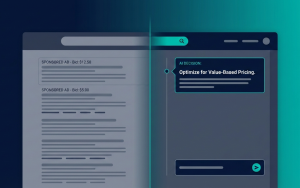
- Optimize for deal-seeking behavior at every entry point. Regardless of how customers discover you, when they’re ready to engage, they’re comparing. Your pricing transparency, promotional clarity, and availability information needs to be immediate and consistent across every possible touchpoint.
The CMO Imperative
This isn’t a technology problem disguised as a marketing challenge—it’s a strategic imperative that requires both. The CMOs who thrive in this environment will be those who can hold two truths simultaneously: our customers are everywhere and nowhere predictable, yet when they decide to engage, they expect us to be ready with relevant, timely, and valuable experiences.
Start by auditing your current stack with brutal honesty. Can it handle customers entering from unexpected angles? Does it require them to follow your prescribed journey, or can it meet them in theirs? When was the last time you stress-tested it with a scenario that doesn’t fit your attribution model?
The consumers are already in these new spaces—virtual worlds, AI conversations, influencer communities, and yes, even watching local TV. The question isn’t whether to meet them there. It’s whether your marketing infrastructure can capitalize on the moment when they decide you’re worth their attention.
Because in this new landscape, awareness is just the beginning. The real competitive advantage belongs to those who can turn fleeting interest into seamless engagement, no matter where or when it happens.