The Debate Over Who Owns the Digital Storefront
When Amazon sent a cease-and-desist letter to Perplexity AI in early November 2025, demanding the startup stop allowing its AI browser agent, Comet, to make purchases on behalf of users, it ignited a debate that will fundamentally reshape e-commerce. The question at the heart of this conflict isn’t just about technology—it’s about control, consumer rights, and the future of online shopping.
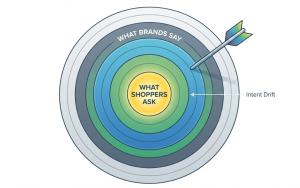
This issue will ultimately test two competing consumer desires: the desire to save time and delegate routine decisions to AI assistants, versus the value derived from curated shopping experiences designed to facilitate discovery, build loyalty, and generate satisfaction. Some consumers will prize efficiency above all else. Others will value the serendipity of browsing and the trust built through personalized recommendations.
The Case for the Walled Garden
Amazon’s position is straightforward: their platform, their rules. And there’s a compelling logic to this argument.
Consider the investment. Amazon, Walmart, and Alibaba have collectively spent billions of dollars crafting unique customer experiences. They’ve built sophisticated recommendation engines, personalized shopping journeys, fraud detection systems, and seamless checkout processes. Amazon’s site alone represents decades of optimization, A/B testing, and customer data analysis designed to create what they believe is the optimal shopping experience.
“We think it’s fairly straightforward that third-party applications that offer to make purchases on behalf of customers from other businesses should operate openly and respect service provider decisions whether or not to participate,” stated Amazon spokesperson Lara Hendrickson. She noted that other intermediaries—from food delivery services to online travel agencies—operate transparently and with permission.
The security and privacy concerns are legitimate. When AI agents access user accounts, they create potential vulnerabilities. Amazon’s terms of service explicitly prohibit “any use of data mining, robots, or similar data gathering and extraction tools”—language designed to protect both the platform and its customers. The company argues that Perplexity’s Comet agent degraded the Amazon shopping experience and introduced privacy risks by disguising itself as a human user through a Google Chrome browser.
There’s also the business model consideration. Amazon’s advertising business, which generates substantial revenue by selling prominent placement in search results, could be undermined if AI agents bypass the traditional browsing experience. When a bot shops for customers based purely on specifications and price, the carefully crafted product pages and strategic ad placements lose their value.
From this perspective, Amazon believers it has every right to protect the ecosystem they’ve built and to determine who—or what—gets to access it.
The Case for Open Access
Perplexity AI, however, sees things differently. “It’s a bully tactic to scare disruptive companies like Perplexity out of making life better for people,” the startup wrote in response to Amazon’s letter.
CEO Aravind Srinivas articulated a vision of consumer sovereignty: “I don’t think it’s customer centric to force people to use only their assistant, which may not even be the best shopping assistant.” His argument is that agents should have “all the same rights and responsibilities” as real human users. If a consumer authorizes an AI agent to act on their behalf, that agent should be treated no differently than the consumer themselves.
This perspective raises fundamental questions about digital rights in the age of AI. When you log into Amazon with your credentials, you’re authenticating your identity. If you then delegate purchasing decisions to an AI agent using those same credentials, isn’t that agent legitimately acting as your proxy? Should Amazon have the right to distinguish between clicks made by your finger and instructions executed by your authorized digital assistant?
The argument extends beyond mere technical access. Consumers are increasingly time-starved and decision-fatigued. AI agents promise to streamline the shopping experience by cutting through the noise—the personalized recommendations, the sponsored placements, the carefully crafted product descriptions—to deliver exactly what users specify. For many consumers, this efficiency is far more valuable than browsing through endless options.
Moreover, there’s an anti-competitive element to the debate. Amazon is developing its own AI shopping agents, including Buy For Me and Rufus. By blocking third-party agents while promoting their own, Amazon could be accused of using their dominant market position to foreclose competition. Perplexity went so far as to accuse Amazon of trying to “eliminate user rights” in order to sell more ads.
The question becomes: do platform owners have the right to create monopolistic control over how consumers access their marketplaces?
A Balance Act: An Evolving Standard
The truth is that both sides have valid points, and the resolution of this conflict will likely emerge from the messy intersection of consumer preferences, competitive dynamics, and eventual regulatory frameworks. This is foreseeable still years in the making as agents incorporate more human-like traits from their user—which may include a proclivity for shopping. Agents will, over time, learn it’s human user’s likes and consumption patterns—enable it to make choices on behalf of the human it emulates it’s actions. At some point, Perplexity’s position become more salient, and Amazon will need to consider algorithms that influence an AI Agent’s decision making algorithms. It makes one’s head spin thinking about that future chess match.
Amazon CEO Andy Jassy acknowledged on a recent earnings call that the current customer experience for AI shopping agents was “not good,” citing lack of personalization, incomplete shopping history, and inaccurate delivery estimates and pricing. He’s not entirely wrong. Current AI agents often provide a suboptimal experience compared to the sophisticated, personalized journeys that major e-commerce platforms have perfected.
But this is a snapshot of a rapidly evolving technology. AI agents will improve. They’ll become better at understanding context, preferences, and nuance. The question is whether platforms like Amazon will work to integrate with these agents or continue to wall them off.
The resolution may lie in a framework of authorized agency—a middle path where AI agents can access e-commerce platforms, but only through official APIs and partnerships that preserve security, privacy, and platform integrity while respecting consumer choice. Much as payment processors and logistics providers integrate with e-commerce platforms through defined interfaces, AI shopping agents could operate within agreed-upon boundaries.
The platforms that spent billions crafting these experiences aren’t wrong to want to protect their investment. But consumers who want to authorize agents to act on their behalf aren’t wrong to expect that freedom either.
As this debate unfolds—likely through a combination of market competition, contractual negotiations, and regulatory intervention—the winners will be determined not by cease-and-desist letters, but by which approach better serves the evolving expectations of consumers. The walled gardens of e-commerce may need to become more like well-tended parks: still curated and maintained, but with multiple gates that consumers can choose to enter through, whether they walk in themselves or send an agent ahead.
The future of online shopping isn’t about choosing between human-crafted experiences and AI efficiency. It’s about finding the balance between both that gives consumers the choice, convenience, and control they increasingly demand.