When AI shopping agents decide what makes the cart, private label has a built-in edge. Here’s how brands stay in the consideration set.
Private label refers to products made by manufacturers but sold under a retailer’s own brand name. Think Kirkland, Great Value, or Good & Gather. Private label momentum is not subtle. Store brands hit record levels in 2024, and industry reporting shows dollar share and unit share at all-time highs in the first half of 2025. With 2025 U.S. private label sales projected to approach roughly $277B and continue rising, the competitive baseline is shifting under every national and emerging brand.
The good news is you do not have to win by discounting your way into irrelevance. You can stay in the consideration set by building structured differentiation. Meaning, you make your product easier for machines to understand, easier for retailers to recommend, and easier for customers to justify, even when private label is “good enough.”
How AI Shopping Agents and Recommendation Engines Actually Choose Products
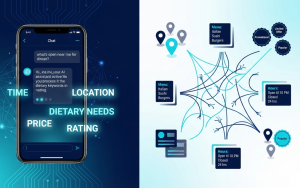
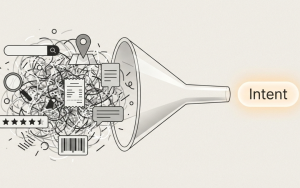
Most shopping agents and recommender systems are designed to optimize outcomes like relevance, likelihood of purchase, customer satisfaction, and fewer returns or substitutions. The specific model varies by platform, but the inputs tend to rhyme:
1) Relevance and “Fit” to the Shopper’s Intent
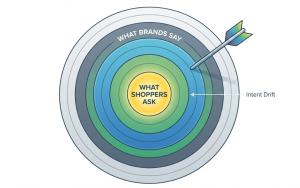
If a shopper asks for “high-protein snack under 200 calories” or “gluten-free hot breakfast for the car,” the agent needs structured attributes to match the request. If your listing is vague, you will not be eligible.
2) Price and Value, Including Unit Economics
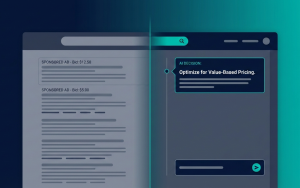
Agents can compare unit price, pack size, shipping cost, deal status, and price history. Some are explicitly built to help shoppers find deals or even auto-purchase when a target price is met.
3) Availability and Fulfillment Confidence
Agents prefer items that are in stock and deliverable, now. Instacart has been explicit that agentic grocery shopping depends on real-time availability and prices across local inventory. In convenience and grocery, “in stock nearby” can beat “best brand.”
4) Reviews, Ratings, and Evidence of Satisfaction
Retailers are embedding review synthesis directly into agent experiences. Walmart’s “Sparky,” for example, highlights review summaries and purchase-confidence features, which means review quality and volume increasingly shape recommendation outcomes.
5) Retailer Incentives and Platform Dynamics
This part is often unspoken. Retailers have margin, loyalty, and differentiation incentives to promote private label. If two items look equal to an agent, private label frequently wins the tie-break.
Why Private Label is Winning More “Ties” Than Before
- Cleaner product data. Retailers control the taxonomy and attributes. Private label listings tend to be more consistent.
- Stronger availability. Retailers can prioritize replenishment and assortment. Fewer “out of stock” events means fewer de-rankings.
- Better default value framing. As inflation pressure persists, shoppers increasingly accept private label as a true alternative. NIQ reporting shows private label stigma continuing to fade and growth remaining strong.
- Built-in placement. Endcaps became “featured modules.” Shelf tags became “recommended for you.”
You can see the category behavior in real life. Coffee is one example where store brand share has climbed meaningfully in 2025, with consumers trading down in many aisles while still sticking with a few branded favorites. That is the playbook. Private label takes the center. Brands survive by being unmistakably worth it.
The Manufacturer Playbook: Structured Differentiation That Agents Can Read
Here are practical moves national and emerging brands can make, without racing to the bottom.
1) Build an “Agent-Ready” Product Record
- Recognizable product name (consistent across retailers)
- Accurate pack size and unit count
- Key attributes (dietary, ingredient callouts, format, flavor, caffeine, strength, etc.)
- Use occasions (breakfast, road trip, late-night, family size, single serve)
- Claims with clear definitions (what does “clean” mean for your brand?)
- High-quality images, including back-of-pack if relevant
- A short, factual “why choose this” line that does not require interpretation
Operational tip: Treat product content like a supply chain. One owner. One source of truth. Clear governance for changes.
2) Win On Availability Like it is a Feature
- Fix store-level item setup and mappings (UPC alignment, pack configuration, correct category)
- Reduce out-of-stocks in top doors and top geographies before you scale marketing
- Tighten retailer feed updates so “in stock” reflects reality, especially for delivery and pickup
If you sell through Instacart, retailer apps, or marketplaces, availability is part of the recommendation logic. It is not a back-office metric anymore.
3) Treat Reviews as a Product Asset, Not a Vanity Metric
- Drive review volume ethically through post-purchase prompts and sampling programs
- Instrument “review themes” (taste, freshness, portion size, value, packaging) and feed them back into product and content
- Respond to issues fast, especially if a defect or shipping problem is creating a ratings drag
Retailers are building shopping agents that directly “read the reviews” for the customer. You want those summaries to sound like your positioning.
4) Compete On Value Architecture, Not Just Price
- Create a “good, better, best” ladder (so you have an answer when private label is the low-price anchor)
- Offer multipacks or bundles that improve unit economics without discounting the core SKU
- Use targeted promotions where agents and platforms surface deals, rather than blanket price cuts
Remember, some agents are explicitly built to track deals and auto-buy at a threshold. If you never show up as a credible value option, you will not get selected.
5) Prove Your Differentiation With Evidence, Not Adjectives
- Third-party certifications (where relevant)
- Clear functional outcomes (protein grams, caffeine mg, sugar grams, sodium mg)
- Ingredient sourcing specifics
- Product performance claims backed by testing or standards
This is especially important as private label expands into categories that used to feel “too premium” for store brands.
6) Partner With Retailers On the Digital Shelf the Same Way You Partner on the Physical Shelf
- Correct taxonomy placement and attribute completeness
- Rich PDP content that answers common pre-purchase questions
- Assortment logic (what items are recommended together, and why)
- Measuring “agent-driven” discovery, not just search rank
Retailers are openly investing in agentic shopping experiences across their own apps and even inside ChatGPT-style interfaces. The brands that show up cleanly inside those flows will keep getting chosen.
A Quick Self-Check: Will an Agent Pick You Next to Private Label?
- If an agent had to describe your product in one sentence, could it do it from your product data alone?
- Are your top SKUs consistently in stock in the geographies where you spend money?
- Do you have enough recent reviews for an agent to summarize confidently?
- Can you articulate your value versus private label without using the words “premium” or “better”?
- Do your listings make it obvious which shopper you are for and which occasion you win?
If you cannot answer “yes” to at least four, you are not losing because private label is cheaper. You are losing because the machine cannot justify you.