Marcus Scrooge-gle sat hunched over his laptop at 2:47 AM, his bloodshot eyes reflecting the blue glow of seventeen browser tabs. Empty energy drink cans formed a metallic fortress around his workspace, and his “World’s #1 SEO Ninja” mug held nothing but cold, bitter coffee and broken dreams.
“Rank higher, you miserable website!” he muttered, frantically stuffing another paragraph with “best digital marketing solutions for small businesses near me with free consultation” for the forty-seventh time. His keyword density calculator showed a beautiful 3.2%—perfect! His backlink profile was pristine! His meta descriptions were chef’s kiss magnificent!
Yet his traffic had plummeted faster than his will to live.
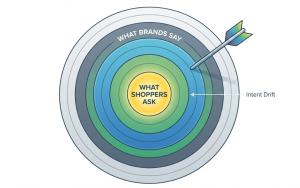
The problem wasn’t his SEO skills. Oh no, Marcus was a wizard with H1 tags and could spot a broken internal link from across the office. The problem was that his clients were now asking questions to ChatGPT instead of typing “best accounting software 2024 reviews comparison” into Google.
“Why aren’t people searching properly anymore?” he wailed to his rubber duck debugging companion. “Don’t they know I spent three years perfecting my long-tail keyword strategy?”
The First Specter: The Ghost of Keywords Past
As the clock struck midnight (or maybe it was 3 AM—time had lost all meaning in Marcus’s SEO-induced haze), his laptop screen flickered. The cursor began moving on its own, typing ancient incantations:
keyword stuffing keyword stuffing keyword stuffing
meta keywords still matter RIGHT??? RIGHT???
<title>Buy Cheap Shoes Online Best Deals Discount Footwear Sale</title>
“Marcus Scrooge-gle!” boomed a voice that sounded like a dial-up modem having an existential crisis. Before him materialized a ghostly figure wrapped in chains made of outdated HTML tags and expired SSL certificates.
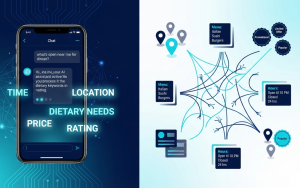
“I am the Ghost of Keywords Past,” the specter announced, “and I’m here to show you the good old days when people actually typed ‘pizza near me open now delivery cheap’ instead of just asking their phone, ‘Hey Google, I’m hungry.'”
The ghost transported Marcus back to 2015, where he watched his younger self celebrating a #3 ranking for “social media marketing agency.” Young Marcus was doing a victory dance, completely oblivious to the coming AI apocalypse.
“Those were simpler times,” the ghost sighed wistfully. “When people couldn’t just ask, ‘What’s the best way to grow my Instagram following?’ and get a personalized answer. They had to wade through your 3,000-word blog post titled ‘Ultimate Guide: Best Ways to Grow Your Instagram Following Fast 2015 Updated Tips Tricks Hacks.'”
“But I was good at this!” Marcus protested. “Look at that keyword density! That internal linking structure! Those alt tags!”
“You were optimizing for robots, Marcus. But now the robots are having conversations.”
The Second Phantom: The Ghost of AdWords Present
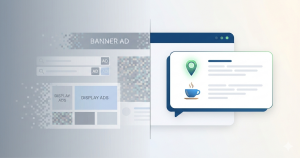
As the first ghost faded away (probably to update its LinkedIn headline to include “AI-Powered” somewhere), another apparition appeared. This one wore a suit made entirely of Google Ads screenshots and carried a briefcase full of Quality Scores.
“I am the Ghost of AdWords Present!” it declared, while compulsively checking its phone for CTR updates. “Come, let me show you what’s happening RIGHT NOW while you’re still trying to bid on ‘best CRM software for small business affordable cheap pricing.'”
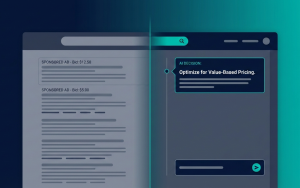
They zoomed through the digital ether to witness Marcus’s competitor, Sarah, who had completely abandoned traditional SEO. Instead, she was training AI chatbots to understand her clients’ needs and providing instant, personalized solutions.
“But where’s her keyword strategy?” Marcus asked in horror, watching Sarah’s business thrive.
“She doesn’t need one,” the ghost replied. “When someone asks ChatGPT ‘How do I improve my customer retention?’, the AI doesn’t care if Sarah’s blog post ranks #1 for ‘customer retention strategies small business guide 2024.’ It cares if her content actually answers the question helpfully.”
Marcus watched in growing panic as potential clients bypassed Google entirely, asking AI assistants for recommendations and getting instant, tailored advice. His carefully crafted meta descriptions sat unclicked, his schema markup unappreciated, his canonical tags unloved.
“This can’t be happening,” he whimpered. “I have 847 perfectly optimized landing pages!”
The Final Phantom: The Ghost of Rankings Yet to Come
The third ghost appeared silently—a hooded figure carrying a crystal ball filled with swirling search algorithms. It didn’t speak, but showed Marcus visions of the future that made his A/B testing heart skip several beats.
In the vision, Marcus saw himself in 2027, still frantically trying to optimize for search engines while the world had moved on to AI-first interactions. His clients had long since departed for competitors who understood that the future wasn’t about ranking #1 for keywords—it was about being the most helpful, relevant answer to actual human problems.
He watched his future self, now sporting a gray beard and a thousand-yard stare, still muttering about meta descriptions while surrounded by “SEO is Dead” headlines from every major marketing publication.
“Please, spirit!” Marcus begged. “Show me it’s not too late! Show me I can change!”
The ghost pointed to a gravestone that read: “Here Lies Traditional SEO. It Lived a Good Life Until People Started Having Conversations with Computers.”
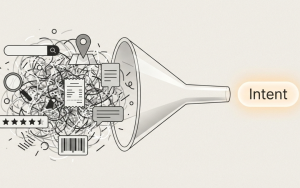
But then the vision shifted. Marcus saw another version of himself—one who had learned to create genuinely helpful content, who understood user intent beyond keywords, who had embraced AI as a tool rather than feared it as an enemy. This Marcus was thriving, helping clients build authentic relationships with their audiences through valuable, conversational content.
The Morning After: A Reformed SEO Specialist
Marcus awoke at his desk, his face bearing the imprint of his keyboard (specifically the keys “S-E-O-R-O-C-K-S”). But something had changed. The obsessive need to check keyword rankings had been replaced by a new understanding.
He opened his laptop and, for the first time in months, didn’t immediately navigate to his rank tracking dashboard. Instead, he asked himself a revolutionary question: “What do my clients actually need to know?”
Then he did something that would have horrified his past self—he started writing content that answered real questions in a natural, conversational tone. He focused on being genuinely helpful rather than optimized. He began experimenting with AI tools instead of cursing them.
Six months later, Marcus’s business had transformed. His content was being referenced by AI systems because it was actually useful, not because it gamed an algorithm. His clients were getting better results because he understood their real needs, not just their search queries.
The Moral of Our Digital Tale
And so, dear reader, we come to the lesson of our marketing morality tale. Like Ebenezer Scrooge clutching his coins, many digital marketers are clinging to SEO tactics of Christmas Past while the Ghost of AI Future rattles its chains at their door.
The spirits of Keywords Past, AdWords Present, and Rankings Yet to Come aren’t here to destroy SEO entirely—they’re here to warn us that evolution is inevitable. The future belongs to those who understand that search is becoming conversational, that algorithms are becoming intelligent, and that the best “optimization” is simply being genuinely helpful.
So beware, dear marketer, of holding too tightly to the ghosts of search past. Embrace the present, prepare for the future, and remember: in a world of AI conversations, the best SEO strategy might just be having something worth talking about.
God bless us, every keyword… except maybe “SEO tips 2019 still working hack guaranteed results.”
Epilogue: Marcus still checks his rankings sometimes, but now he also asks ChatGPT what people are actually wondering about his industry. And you know what? Both his traffic AND his sleep schedule have never been better.
Tiny Tim’s final words: “God bless us, every search query—even the ones that bypass Google entirely!”