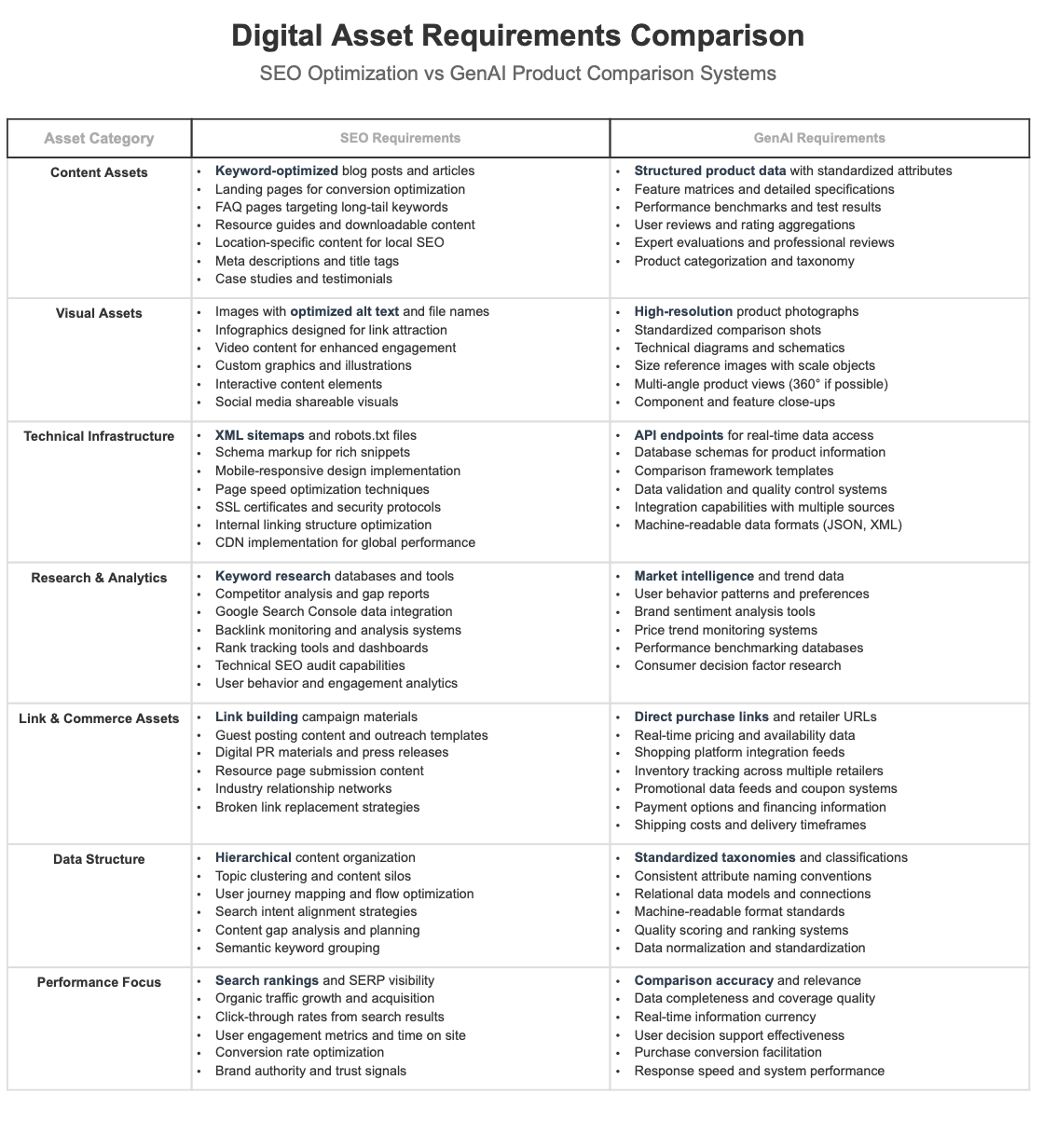
The digital marketing landscape is undergoing a fundamental shift. While Search Engine Optimization (SEO) has been the cornerstone of online visibility for decades, a new paradigm is emerging: Answer Engine Optimization (AEO). Understanding the distinction between these two approaches is crucial for businesses looking to maintain their competitive edge in an AI-driven world.
What is Traditional SEO?
Traditional SEO focuses on ranking higher in Search Engine Results Pages (SERPs) through links and traditional search mechanisms. The primary goal is to drive users to click through to your website, where they can then navigate and explore your content. This approach centers around optimizing for keywords, building backlinks, improving meta tags, and enhancing page speed to improve your site’s visibility in search results.
The user journey in traditional SEO is indirect: users see your blue links, snippets, or ads in search results, click through to your site, and then hopefully convert. Success is measured through metrics like click-through rates (CTR), impressions, and keyword rankings.
The Rise of Answer Engine Optimization (AEO)
AEO represents a paradigm shift toward becoming the direct answer in AI-powered answer engines and voice assistants. Instead of competing for clicks, AEO focuses on being the source that AI systems use to provide immediate, actionable responses to user queries.
The objective is fundamentally different: rather than driving traffic to your website, AEO aims to position your content as the authoritative source that AI engines reference when providing instant answers or executing tasks for users. This means users get immediate value without necessarily visiting your site.
Key Differences in Approach
Content Strategy
Traditional SEO relies heavily on blog posts, landing pages, and keyword clusters designed to capture search traffic. AEO, however, requires content structured in Q&A formats with concise, factual information that’s easily digestible by AI systems.
Technical Optimization
While SEO focuses on HTML pages optimized for web crawlers, AEO emphasizes structured data, schema markup, and knowledge graphs. The goal is to make information machine-readable rather than just human-readable.
User Interaction Models
SEO operates on a click-and-navigate model where users actively browse your site after clicking through from search results. AEO operates on an instant-answer model where users receive immediate responses or task execution without additional navigation.
Measurement Metrics
SEO success is traditionally measured through website traffic metrics like CTR and keyword rankings. AEO success is measured by answer inclusion rates, execution completion rates, and how often AI agents reference your content as authoritative.
Structuring AEO Content with CRSTBL Framework
To maximize your content’s effectiveness in answer engines, implement the CRSTBL framework for structuring your responses:
Clear: Provide direct, unambiguous answers that eliminate confusion Relevant: Ensure every piece of information directly addresses the user’s query Specific: Include precise details, measurements, and actionable information
Trustworthy: Cite authoritative sources and provide verifiable claims Brief: Keep responses concise while maintaining completeness Logical: Structure information in a sequence that flows naturally
When creating AEO content, format your information using this framework to ensure AI systems can easily extract and present your content as authoritative answers. For example, instead of a lengthy blog post about product features, create structured FAQ entries that follow CRSTBL principles, making each answer clear, specific, and immediately useful.
Leveraging Discovery and Execution Engine (DXE) Capabilities
The true power of AEO emerges when combined with Discovery and Execution Engine (DXE) capabilities that bridge the gap between information discovery and transaction execution. DXE systems enable AI agents to not only provide answers but also facilitate immediate actions when consumers are ready to purchase.
Implementing DXE Integration
Structure your business data to support seamless discovery-to-execution workflows:
Discovery Phase: Ensure your product information, pricing, availability, and specifications are structured in machine-readable formats that AI systems can easily access and present.
Execution Phase: Integrate transaction-ready endpoints that allow AI agents to complete purchases, bookings, or service requests directly on behalf of users.
Practical DXE Applications
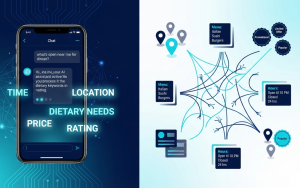
Consider a user asking an AI assistant about restaurant reservations. With proper DXE implementation, the system can:
1. Discover available restaurants matching the user’s criteria
2. Present options with real-time availability and pricing
3. Execute the reservation booking when the user confirms their choice
This seamless flow from question to transaction represents the future of commerce in an AI-driven ecosystem.
Business Impact: Traffic vs. Direct Conversion
Perhaps the most significant difference lies in the business model implications. Traditional SEO follows a traffic acquisition approach—drive visitors to your site, then convert them through your sales funnel. This model relies on your ability to engage users once they arrive and guide them through the conversion process.
AEO, however, enables direct conversions through AI agents. Instead of hoping users click through and convert on your site, AEO combined with DXE capabilities can lead to immediate bookings, purchases, or other conversions facilitated directly by AI systems that have access to your structured business data and transaction capabilities.
Preparing for the AEO Future: Updating From Existing SEO Investments
The shift toward AEO doesn’t mean abandoning SEO entirely, but rather evolving your strategy to encompass both approaches. Start by implementing structured data markup using the CRSTBL framework, creating FAQ-style content, and organizing your information in formats that AI systems can easily parse and understand.
Invest in DXE-compatible systems that allow AI agents to access your inventory, pricing, and transaction capabilities in real-time. This infrastructure will become increasingly valuable as more consumers rely on AI assistants for both information and purchasing decisions.
As AI-powered search and voice assistants become more prevalent, businesses that adapt to AEO principles and implement DXE capabilities will find themselves better positioned to capture value in an increasingly automated digital landscape. The future belongs to those who can effectively communicate with both human users and AI systems while providing frictionless paths from discovery to purchase.
The evolution from SEO to AEO represents more than just a tactical shift—it’s a fundamental reimagining of how businesses connect with their audiences and facilitate transactions in an AI-first world.