How AI Could Unlock Billions in Hidden Profits for Restaurants
September 18, 2025
In the first wave of enterprise AI investment, high-skilled workers have reaped most of the benefits. Lawyers, analysts, designers have seen automation and productivity tools reshape their workflows. But for restaurants—low-margin, high labor, service-intensive operations—similar investments are just beginning to trickle in.
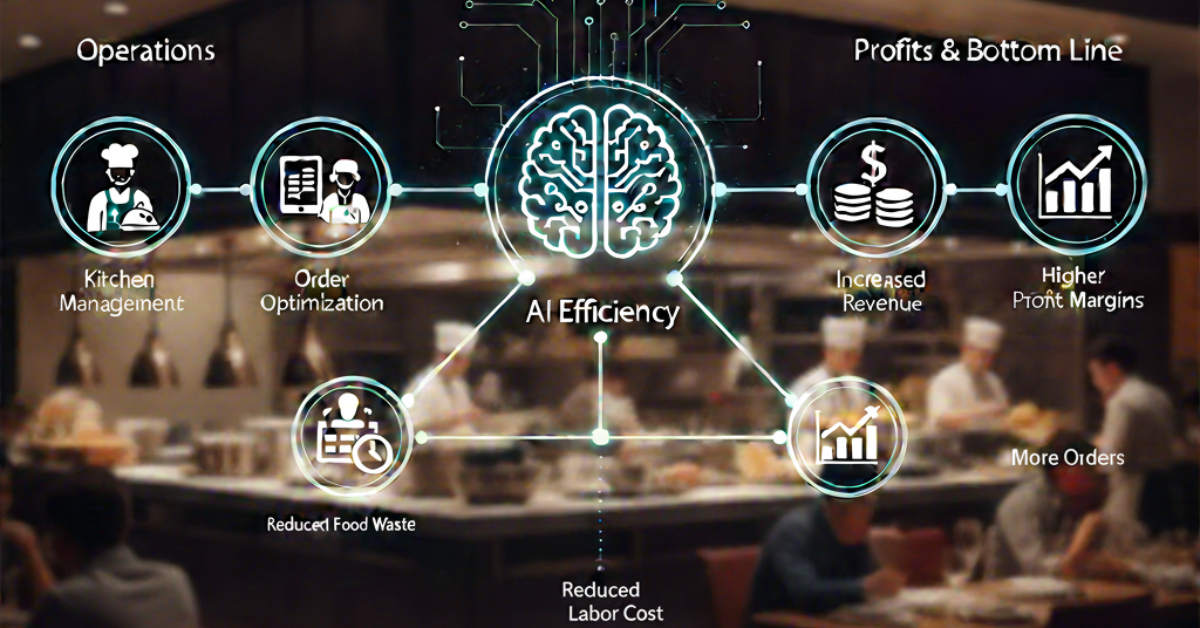
If AI is deployed more broadly in restaurants—for handling phone calls, reservations, order input, scheduling, and other routine tasks—the potential financial gains are large. It could shift both the top and bottom lines substantially for many operations.
The Cost Pressure Restaurants Face
- Labor costs in U.S. restaurants typically consume 25–35% of revenue, depending on service style (quick service, casual, upscale).
- Many restaurants struggle to meet labor cost targets. Overstaffing during slow hours, understaffing during peak hours, inefficient scheduling all contribute to profit leakage.
What’s Being Lost (and What AI Can Recover)
Missed calls & order/reservation loss
- Restaurants miss about 43% of incoming phone calls, which industry-data shows can translate into as much as $250,000 per year in lost revenue for an average restaurant.
- For a typical quick service restaurant receiving ~150 missed calls/month, where ~60% are actionable (orders or reservation requests), at an average ticket size of $25, that equals $2,250/month, or over $27,000/year in lost revenue just from missed phone interactions.
Labor scheduling inefficiencies
- Tools that forecast demand and optimize scheduling can reduce unnecessary labor cost by up to 15%.
- Given labor is ~30% of revenue, a 10–15% reduction in labor waste corresponds to a reduction of 3–4.5 percentage points of revenue that had been eaten by inefficiency.
Example: A 50-Seat Restaurant
Using publicly available industry data, some of what AI can bring:
| Measure | Baseline Assumptions | Savings via AI/Gains Estimate |
|---|---|---|
| Labor cost as % of revenue | ~30% | If AI reduces waste by 10%, labor cost falls toward ~27% (i.e. 3 points), improving margin by that amount. |
| Missed call recovery | ~43% calls missed, average loss ~$250,000 | AI that forces answer rate near 100% could recapture much of that lost revenue. Even recovering half yields ~$150,000+ additional revenue/year. |
| Monthly revenue uplift from AI host systems | - | A 50-seat restaurant using an AI phone/host system could generate an additional $3,000 to $18,000/month in revenue via recovered orders/reservations, roughly $36,000 to $216,000/year. |
Thus, for a modest restaurant, combining better scheduling, recovered phone/reservation revenue, and automation of routine tasks could yield $50,000 to $200,000+ in additional profit per year, depending on size, location, and current inefficiencies.
Broader Economic Implications
If these gains were scaled across the U.S.:
- There are hundreds of thousands of independent restaurants. Even if only 25% adopt effective AI tools and each recaptured $100,000/year in lost revenues and saved labor costs, that translates to tens of billions of dollars in economic gains.
- Beyond revenue, customer satisfaction improves: fewer wait times, no dropped calls, more accurate orders, better reservation handling. That can reduce churn and increase repeat business, further compounding gains.
Things to Watch / Risks
- Upfront costs: deploying AI systems (phone automation, scheduling, order input) requires investment, integration, training. This is especially challenging for single-location operators.
- Customer preferences: some customers prefer human interaction; poorly implemented automation can cause frustration. The key here is to segregate interactions based on human intervention priorities.
- Regulatory / labor issues: as AI replaces or shifts human tasks, there may be legal, ethical, or employment risks. These are issues that will be society-wide, and we’ll all have to work through them together.
Conclusion
AI tools aimed at low-skill, service operations represent an underexploited opportunity. In restaurants, the gains from better handling of orders/reservations, reducing missed phone interactions, and optimizing labor scheduling are both real and measurable. For many restaurants, these savings could shift from marginal to material.
AI Isn’t an Ad Channel. It’s a Decision Engine.

Why Traditional Ads Don’t Belong in AI Conversations
AI Visibility Starts With Intent: How to Control What Chatbots Say About Your Locations, Menus, and Offers
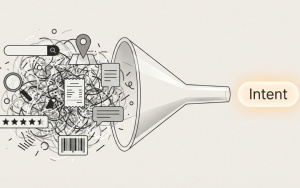
Signals, Insight, and Intent. The Difference That Separates “Data Rich” From “Customer Ready”
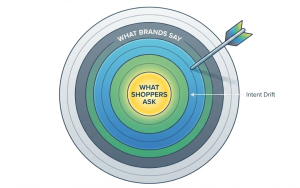
The Intent Gap: Where Messaging Loses the Sale