AI to the Rescue: How a Digital Assistant Booked a Same-Day Plumber
September 11, 2025
Case Study: How AI Agents Transform Home Service Scheduling
The Homeowner’s Challenge
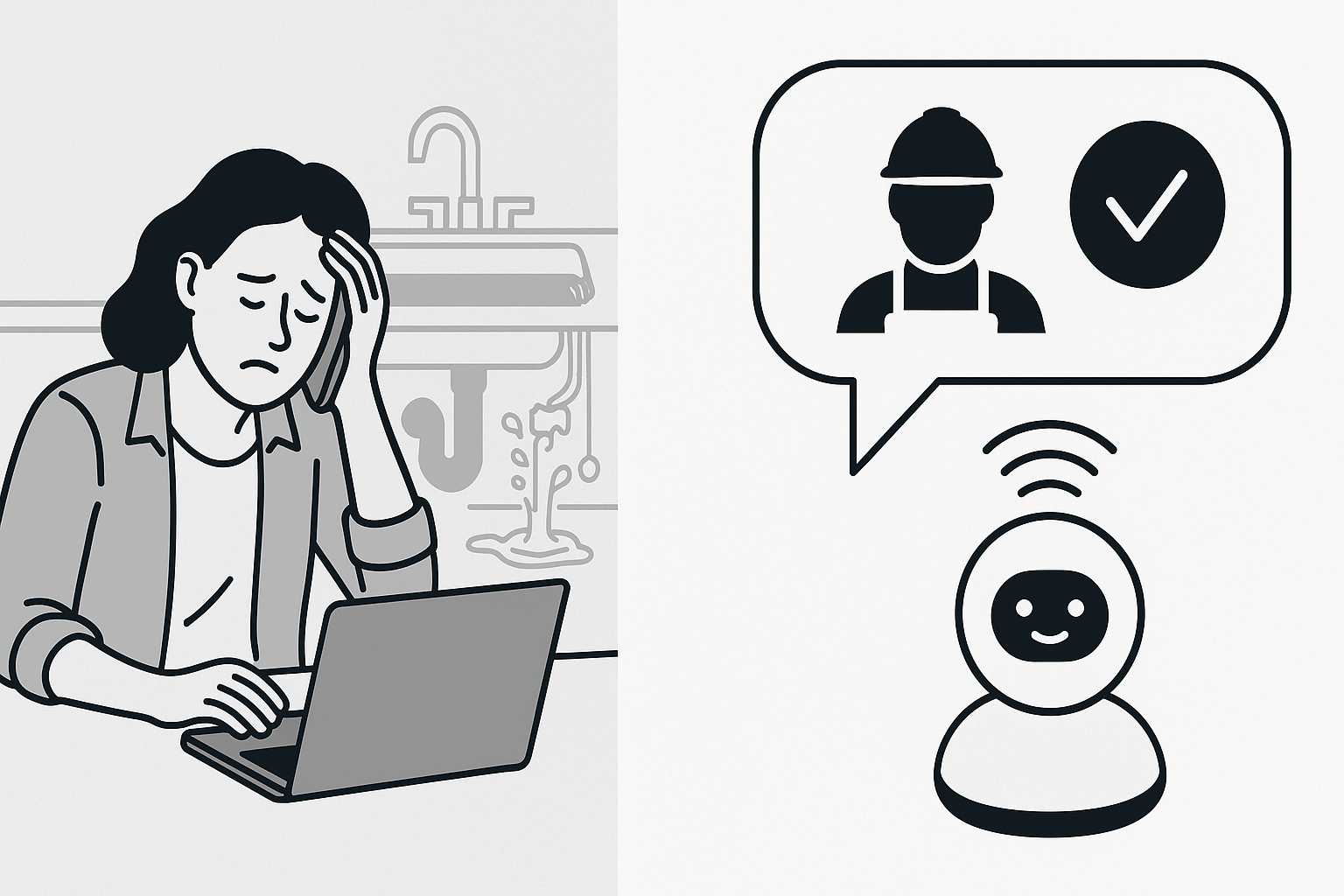
Sarah is a busy homeowner working remotely when her kitchen drain suddenly clogs. She needs a plumber the same day, at a fair price, with a minimum 30-day service guarantee and reviews above 4.0 on Yelp, Google, or Angi. She does not have time to research and call around while she works.
Fortunately, Sarah has a voice-driven personalized AI agent on her phone that understands her preferences and can take over the task.
Step 1: Initiating the Request
Sarah:
“Alexa, find me a plumber to clear my kitchen drain today. Look for someone with competitive pricing, at least a 30-day guarantee, and ratings higher than 4.0 on Yelp, Google, or Angi.”
The AI agent immediately begins searching on her behalf.
Step 2: Traditional AI-to-Human Workflow
At first, Sarah’s AI reaches out to plumbing companies where humans still handle responses.
QuickFix Plumbing
Sarah’s AI: “Hi, I’m requesting availability for a drain clearing service on behalf of my client. Can you confirm same-day availability, service fee, and guarantee?”
QuickFix: “We can come this afternoon for $120. We provide a 45-day guarantee and follow-up visits are free within that period.”
Reliable Rooter
Reliable Rooter: “We can come this evening for $110 with a 30-day guarantee.”
Sarah’s AI: “Your Yelp rating is below 4.0. Can you share any customer references?”
Reliable Rooter: “Our Yelp score reflects older reviews. In the last 12 months, our ratings have been much stronger.”
HomeCare Plumbers
Available tomorrow morning at $100, with a 60-day guarantee, but no same-day option.
After several minutes of back-and-forth with different providers, Sarah’s AI consolidates the information.
| Provider | Availability | Fee | Guarantee | Rating(s) | Notes |
|---|---|---|---|---|---|
| QuickFix Plumbing | Today | $120 | 45 days | 4.2 Yelp 4.2 Google | Includes follow-ups |
| Reliable Rooter | Today (evening) | $110 | 30 days | 3.9 Yelp 4.1 Angies | Rating below 4.0 on Yelp |
| HomeCare Plumbers | Tomorrow | $100 | 60 days | 4.5 Google | No same-day availability |
QuickFix meets all Sarah’s requirements, so the AI confirms the booking.
Step 3: The Appointment
QuickFix: “We can confirm a 3:00 PM appointment. If there is a garbage disposal issue, the price could increase by $35–$100.”
Sarah’s AI: “Thank you. Please send SMS notifications with plumber John’s arrival time.”
The agent then updates Sarah:
“I have booked QuickFix Plumbing for 3:00 PM today. They charge $120 with a 45-day guarantee. Free follow-ups are included. Would you like me to remind you 15 minutes before the appointment?”
Sarah: “Yes, please.”
Step 4: The Next Evolution — AI-to-AI
Now imagine the same scenario, but instead of waiting for human replies, Sarah’s AI agent communicates directly with the plumbing companies’ AI systems.
The query is dispatched in structured data format, and responses come back in seconds:
QuickFix AI Response:
Availability: Today (Afternoon)
Fee: $120
Guarantee: 45 days
Yelp/Google: 4.2
Policy: Follow-up visits included
Reliable Rooter AI Response:
Availability: Today (Evening)
Fee: $110
Guarantee: 30 days
Yelp: 3.9 (disqualified by criteria)
HomeCare Plumbers AI Response:
Availability: Tomorrow (Morning)
Fee: $100
Guarantee: 60 days
Within less than a minute, Sarah’s AI processes the results, filters out disqualified options, and books the appointment through structured data exchange. No hold times, no missed details.
Step 5: Comparing Workflows
| Workflow Type | Time Required | Notes |
|---|---|---|
| Human-only | 30-40 minutes | Research, calls, waiting on hold |
| One-sided AI (User) | 10-12 minutes | Still dependent on human responses from providers |
| Two-sided AI (User + Business) | 2-3 minutes | Instant structured communication between agents |
With both customer and provider using AI agents, the entire process compresses to just a few minutes.
Practical Benefits
For Customers
Convenience: No searching or waiting on hold.
Speed: Results and booking in minutes.
Personalization: Matches providers to exact preferences.
For Businesses
Efficiency: Instant structured responses free up staff time.
Sales: Lower friction increases bookings.
Service Quality: Standardized job data ensures better planning.
Conclusion
Sarah’s case study illustrates the journey from human-only workflows to user-only AI support and finally to two-way AI agentic communication. Each step reduces time, effort, and uncertainty.
The future of service scheduling is clear. As more businesses deploy AI responders, homeowners will enjoy near-instant booking while providers capture more jobs with less manual overhead. What once took 40 minutes can now take 3.
AI Isn’t an Ad Channel. It’s a Decision Engine.
Why Traditional Ads Don’t Belong in AI Conversations
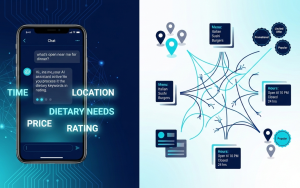
AI Visibility Starts With Intent: How to Control What Chatbots Say About Your Locations, Menus, and Offers
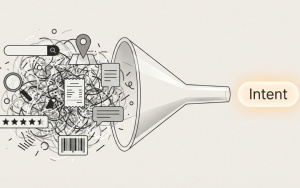
Signals, Insight, and Intent. The Difference That Separates “Data Rich” From “Customer Ready”
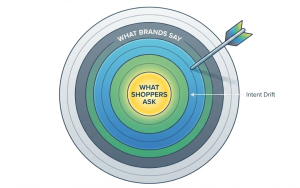
The Intent Gap: Where Messaging Loses the Sale